Seasonal yard clean-ups play a crucial role in maintaining lawn health, enhancing curb appeal, preventing pests, and saving on long-term maintenance costs. A well-timed cleanup sets the stage for a vibrant, healthy landscape and reduces issues that can arise from neglected debris or stressed plants.
In essence, spring clean-ups focus on revival and preparing your yard for robust growth, while fall clean-ups concentrate on protection and readying your landscape for the challenges of winter.
To help you plan effectively, let’s break down what spring clean-up vs. fall clean-up typically includes, the key tasks involved, and optional add-ons that can make your yard healthier and easier to maintain year-round.
Quick Side-By-Side Snapshot of Spring Clean-Up vs. Fall Clean-Up
Spring Clean-Up
- Debris removal
- Pruning dead wood
- First mow of the season
- Dethatching
- Aeration
- Fertilizing
- Reseeding thin patches
- Mulch refresh
- Irrigation system check
Fall Clean-Up
- Leaf removal
- Final mow
- Gutter cleaning
- Plant winterization
- Pruning for dormancy
- Mulch top-up
- Debris hauling
- Winter fertilizer application
Deep Dive: What Does Spring Clean-Up Services Include
A spring clean-up gives your yard a fresh start after the colder months. It clears leftover clutter, wakes up the soil, and encourages strong new growth. This early-season work also reduces disease risks, improves turf recovery, and brings back a clean, healthy look.
What Usually Happens During a Spring Clean-Up
The first step is clearing winter debris and old plant material. Branches, leaves, and leftover buildup are removed so sunlight and air can reach the ground again. After this, crews prune damaged branches and thin out shrubs to improve structure and support healthier growth.
Once plants are tidied, attention shifts to the lawn. The first mowing of the season sets the height for new growth, followed by light turf cleanup along edges. If the soil feels compact, dethatching or core aeration may be added to open up pathways for water and nutrients.
Fertilizer or starter treatments are often applied at this stage to strengthen roots and spark steady growth. Thin areas get repaired with seed or sod to keep the lawn even and full.
Garden beds receive a fresh layer of mulch to help with moisture control and weed suppression. Edging is sharpened to give borders a clean line. Irrigation and drainage systems are then tested to confirm they run properly and distribute water evenly.
Hard surfaces also get attention. Walkways, stones, and patios are cleaned to remove salt, sand, or stains left behind by winter weather.
Optional Add-Ons
Some properties benefit from soil testing to check nutrient levels. Early weed control can stop young sprouts before they spread. A pest inspection helps identify insects that may cause problems later in the season.
Tools Used During Spring Work
Typical tools include rakes, pruning shears, hedge trimmers, mowers, dethatching tools, aerators, spreaders, edging tools, wheelbarrows, and blowers.
A solid spring clean-up sets the pace for the entire growing season. It restores order, strengthens plant health, boosts curb appeal, and makes ongoing maintenance much easier. With the right start, your yard stays thicker, greener, and more resilient as the weather warms.
Deep Dive: What Does A Fall Clean-Up Service Include
A fall clean-up prepares your yard for winter, protecting plants, preventing disease, and reducing hazards that can arise during the colder months. This season’s work ensures your landscape stays healthy and ready to thrive when spring returns.
Key Tasks During a Fall Clean-Up
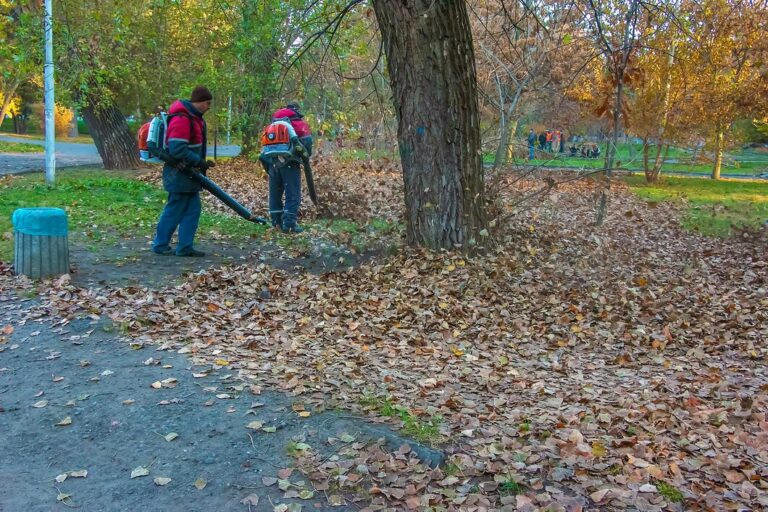
The process begins with raking and removing leaves, followed by composting or hauling away debris to prevent mold and pest infestations. Next comes the final mowing of the lawn, trimming grass to an appropriate height to reduce winter stress.
Gutters and downspouts are cleaned to prevent clogs that could cause ice dams or water damage. Perennials and shrubs are pruned as needed to remove damaged or dead growth and to shape plants for dormancy. Annuals and diseased plant material are also cleared away to reduce disease risk and keep garden beds tidy.
Winterizer fertilizer is applied to strengthen grass roots, helping lawns survive cold temperatures. Mulch is refreshed or added to insulate plant roots and protect soil from freezing. Irrigation systems and outdoor faucets are winterized to prevent damage from freezing water, and outdoor furniture or equipment is secured or stored.
Optional Seasonal Add-Ons
Some properties benefit from aeration in the fall, especially cool-season lawns, which improve soil structure and nutrient absorption. Tender trees or shrubs may need wrapping with burlap or protective covers to shield them from harsh winter conditions.
Tools and Equipment Commonly Used
Fall clean-ups typically involve leaf rakes, blowers, pruners, hedge trimmers, lawn mowers, wheelbarrows, garden carts, shovels, and protective gear for handling debris safely.
Completing a thorough fall clean-up ensures your yard enters winter in top condition. It protects plants from disease, keeps lawns healthy, reduces hazards from debris or ice, and sets the stage for a smooth, thriving spring. A well-prepared yard requires less work in the spring and provides peace of mind throughout the colder months.
Garden Ecology And Alternative Approaches
Seasonal clean-up doesn’t have to follow a single approach. Homeowners can choose between a tidy fall clean-up or a more wildlife-friendly spring clean-up, depending on priorities for aesthetics, ecology, and workload.
Benefits of Leaving Plant Material Over Winter
Keeping spent stems, seedheads, and leaves through winter provides valuable habitat for beneficial insects such as ladybugs, solitary bees, and lacewings. Seedheads and grasses supply food for overwintering birds, while fallen leaves and plant debris shelter amphibians like frogs and salamanders, which help control garden pests. Some perennials also overwinter better with their crowns protected by remaining foliage.
When Fall Removal Is Necessary
Certain situations call for a more thorough fall clean-up. Diseased or pest-infested plants should be removed to prevent problems from spreading. Plants that re-seed aggressively may need to be cut back to prevent unwanted growth in the spring. Removing these items helps maintain healthy beds without sacrificing the overall ecosystem benefits.
A Practical Compromise
For gardeners who want to balance tidiness with ecological support, a mixed approach works well: clear leaves and debris from high-traffic areas, visible front yards, and walkways, while leaving less visible beds and backyards to provide habitat for wildlife. This way, your garden remains attractive, safe, and supportive of local ecosystems throughout the winter.
How To Choose: A Simple Decision Flow
Deciding between a spring or fall clean-up depends on your climate, property goals, plant types, existing issues, physical ability, and personal aesthetic preference. Considering these factors helps create a plan that fits both your yard and your lifestyle.
Quick Rules of Thumb
- Prioritize fall removal if your plants had disease or pest problems during the year.
- Prioritize fall clean-up for a neat, show-ready yard and an early spring start.
- Delay major clean-up until spring if supporting wildlife, beneficial insects, or natural seed dispersal is important to you.
Sample Pacing Plan for Busy Gardeners
For those who feel overwhelmed, breaking tasks into smaller chunks can make seasonal clean-up manageable:
- Fall: Remove diseased plants, clear vegetable beds, rake high-traffic areas.
- Winter: Spend 15–30 minutes a week tidying specific garden sections if needed.
- Early Spring: Prune fruit trees, roses, and early-blooming plants; clean remaining debris.
- Late Spring: Finish pruning late-blooming shrubs and perennials; tackle reseeding or sod.
- Summer: Maintain flowering plants and trim as needed after blooms.
Spreading the work across seasons reduces physical strain, preserves plant and wildlife benefits, and keeps your garden manageable without sacrificing overall health or appearance.
Cost Factors And Sample Pricing Ranges
Key Cost Drivers
- Property size: Larger yards require more labor and time, raising costs.
- Debris volume and yard condition: A lightly maintained yard is cheaper to clean than a neglected one with thick overgrowth or heavy leaf and branch accumulation.
- Slope and accessibility: Steep terrain, narrow paths, or obstacles like trees and landscaping features increase difficulty and labor.
- Add-on services: Extra tasks such as pruning, mulching, hedge trimming, gutter cleaning, or debris hauling add to the total.
- Regional factors: Local labor rates, disposal fees, and transport costs can significantly influence pricing.
Sample Pricing Ranges
| Yard Size / Condition | Approximate Size | Approximate Cost* |
| Small yard, light cleanup | Up to 2,500 sq ft | $100 – $250 |
| Medium yard, standard cleanup | 2,500–5,000 sq ft | $200 – $400 |
| Large or overgrown yard | 5,000–10,000 sq ft | $400 – $800+ |
| Very large or heavily neglected property | Over 10,000 sq ft | $800 – $1,200+ |
*Prices typically include basic debris removal, light trimming, and hauling. Costs rise with additional services, heavier debris, or complex terrain.
Seasonal Add-Ons Explained
- Aeration: Reduces soil compaction; best in early spring or early fall.
- Dethatching: Removes thick layers of dead grass; best in spring or early fall.
- Overseeding: Fills bare spots and thickens lawn; best in early fall for cool-season grasses, spring for warm-season grasses.
- Topdressing: Adds soil or compost to improve soil quality; best after aeration in early fall or spring.
- Insect or Disease Treatments: Prevents or controls pests and fungal issues; preemptive in spring/early summer, reactive as needed.
- Irrigation Repairs / Adjustments: Ensures proper water distribution; best in spring before heat or early fall.
- Snow Prep Services: Protects plants and hardscape before winter; best in late fall before first snow.
Wrapping Up
Spring clean-ups revive your yard, encourage healthy growth, and set the stage for a vibrant growing season, while fall clean-ups protect plants, prevent disease, and prepare your landscape for winter. Both seasons add value by promoting lawn and garden health, improving curb appeal, and reducing long-term maintenance challenges.
Homeowners can decide priorities based on their yard’s needs, personal aesthetics, and ecological goals, then choose between handling tasks themselves or hiring professionals to ensure the right timing and thorough results.