
Snow shoveling vs snow blowing is a common debate for homeowners during the winter months.
When snow starts piling up on driveways, sidewalks, and walkways, the big question becomes: should you grab a shovel or rely on a snow blower? Both methods can get the job done, but the right choice depends on factors like snowfall amount, property size, physical effort, and overall cost.
Some homeowners prefer the simplicity and low cost of snow shoveling, while others value the speed and convenience of snow blowing, especially after heavy snowstorms.
Understanding the differences between these two snow removal methods can help you decide what works best for your home, your schedule, and your safety.
What Is Snow Shoveling?

Snow shoveling is the traditional and most common method of removing snow from driveways, sidewalks, steps, and walkways.
It involves manually lifting, pushing, or scraping snow using a shovel to clear surfaces and create safe paths around your home.
How Snow Shoveling Works
Snow shoveling requires physical effort, as you manually move snow off paved areas.
Depending on the shovel type, you may be lifting snow, pushing it aside, or scraping compacted snow and ice.
It’s typically done multiple times during or after a snowfall to prevent buildup and freezing.
Common Tools Used for Snow Shoveling
- Standard snow shovels
- Ergonomic or bent-handle shovels
- Snow pushers and scoops
- Ice scrapers and chippers (for hardened snow and ice)
Best Situations for Snow Shoveling
Snow shoveling works best for:
- Small driveways and short walkways
- Light to moderate snowfall
- Quick cleanups after overnight snow
- Homeowners who want a low-cost solution
- Areas that need precise clearing, like steps and narrow paths
What Is Snow Blowing?
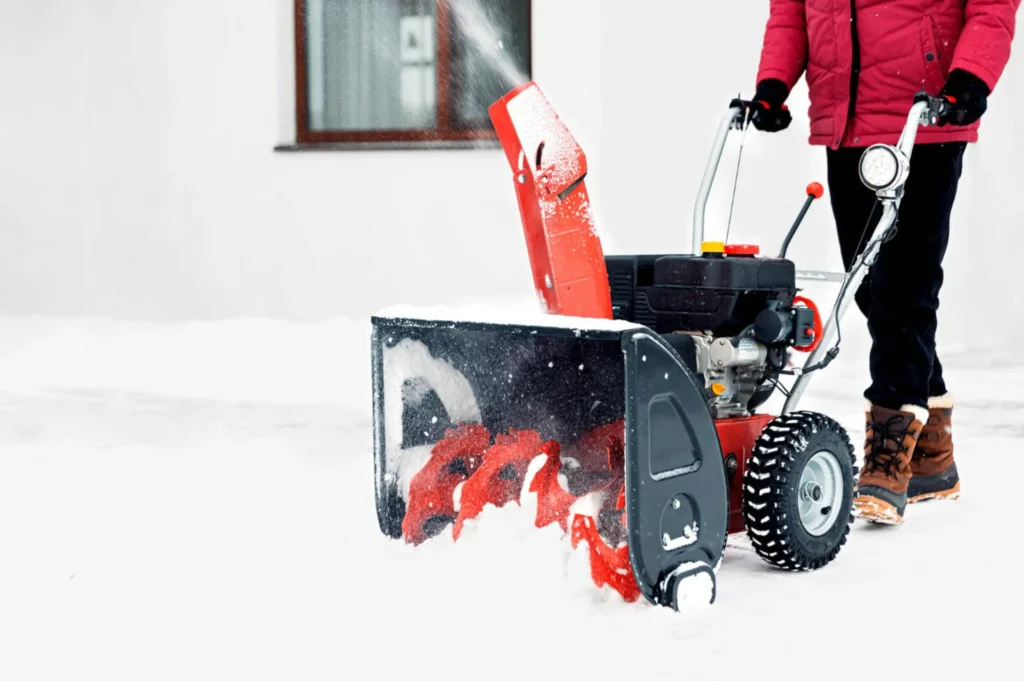
Snow blowing is a mechanical method of snow removal that uses a powered machine to collect and throw snow away from driveways, sidewalks, and larger paved areas.
It’s designed to clear snow quickly and efficiently, especially during heavy or frequent snowfalls.
How Snow Blowing Works
A snow blower uses rotating augers to scoop up snow and discharge it through a chute, throwing it several feet away from the cleared area.
This allows homeowners to remove large volumes of snow without lifting, making the process faster and less physically demanding compared to shoveling.
Types of Snow Blowers
- Single-stage snow blowers: Best for light snowfall and smaller areas
- Two-stage snow blowers: Ideal for heavy, deep, or wet snow
- Electric snow blowers: Quieter and lower maintenance, suited for smaller spaces
- Gas-powered snow blowers: More powerful, designed for large driveways and tough conditions
Best Situations for Snow Blowing
Snow blowing is best for:
- Large or long driveways
- Heavy or frequent snowfall areas
- Wet, compacted, or deep snow
- Homeowners looking to save time
- People who want to reduce physical strain
Snow Shoveling vs Snow Blowing: Key Differences
While both snow shoveling and snow blowing aim to clear snow from your property, they differ significantly in effort, cost, speed, and effectiveness.
Understanding these key differences can make it much easier to choose the right option for your home.
Time and Effort Required
Snow shoveling is time-consuming and physically demanding, especially after heavy snowfall.
Clearing a driveway by hand can take a significant amount of time and energy.
Snow blowing, on the other hand, is much faster and requires far less physical effort, making it ideal for larger areas.
Cost Comparison
Snow shoveling has a very low upfront cost—usually just the price of a shovel.
Snow blowing requires a larger investment, as snow blowers can be expensive and may require fuel, electricity, and maintenance over time.
Physical Strain and Safety
Shoveling involves lifting and repetitive motion, which can strain the back, shoulders, and heart.
Snow blowing reduces physical strain but still requires careful handling and attention to safety, especially on icy surfaces.
Effectiveness in Light vs Heavy Snowfall
Shoveling works well for light to moderate snowfall, but becomes challenging with deep or wet snow.
Snow blowers perform much better in heavy, packed, or frequent snowfall conditions.
Storage and Maintenance
Snow shovels are easy to store and require little to no maintenance.
Snow blowers need storage space, regular maintenance, and proper off-season care to stay reliable.
Pros and Cons of Snow Shoveling
Snow shoveling is often the first option homeowners consider because of its simplicity and low cost.
However, it comes with both advantages and limitations that are important to understand before relying on it all winter.
Advantages of Snow Shoveling
- Low upfront cost
- No fuel or electricity required
- Easy to store with minimal space needed
- Precise control for steps, walkways, and tight areas
- Simple and immediately accessible during sudden snowfall
Disadvantages of Snow Shoveling
- Physically demanding and time-consuming
- Increased risk of back injuries and fatigue
- Less effective during heavy or wet snowfall
- Requires frequent clearing to prevent buildup and ice
- Not ideal for large driveways or long walkways
Pros and Cons of Snow Blowing
Snow blowing is a popular choice for homeowners who deal with frequent or heavy snowfall. While it offers speed and convenience, it also comes with some considerations.
Advantages of Snow Blowing
- Much faster than manual shoveling
- Handles deep, heavy, and wet snow effectively
- Reduces physical strain and fatigue
- Ideal for large driveways and wide areas
- Helps keep snow from piling up near cleared surfaces
Disadvantages of Snow Blowing
- Higher upfront cost compared to shovels
- Requires regular maintenance and storage space
- Can be difficult to use in tight or uneven areas
- Needs fuel or electricity to operate
- May struggle with ice or heavily compacted snow without prior clearing
Which Option Is Better for Your Home?
Choosing between snow shoveling and snow blowing depends on your property size, physical ability, and how much snow your area typically receives.
There’s no one-size-fits-all solution—each method works better in different situations.
Small Driveways and Walkways
For homes with short driveways, sidewalks, or minimal snow accumulation, snow shoveling is often enough.
It’s cost-effective, easy to manage, and allows for precise clearing around steps and tight spaces.
Large Driveways and Corner Lots
If your home has a long or wide driveway, snow blowing is usually the better option.
It clears large areas quickly and prevents snow from piling up along the edges, a common problem with manual shoveling.
Seniors and Homeowners With Physical Limitations
Snow blowing is generally safer for individuals who want to avoid heavy lifting and repetitive motion.
In many cases, hiring a professional snow removal service is the safest and most reliable option.
Areas With Frequent Heavy Snowfall
In regions that experience frequent or heavy snowstorms, snow blowers perform far better than shovels.
They save time, reduce fatigue, and handle deep or wet snow more effectively.
When Hiring Professional Snow Removal Makes More Sense
For many homeowners, neither snow shoveling nor snow blowing is always the most practical option, especially during harsh winter conditions.
Professional snow removal services offer a reliable alternative that removes the hassle and risk altogether.
Safety and Liability Concerns
Snow and ice can create serious slip-and-fall hazards.
Professional snow removal helps reduce liability by ensuring driveways, sidewalks, and walkways are cleared promptly and properly, especially during heavy or repeated snowfall.
Time-Saving Benefits
Clearing snow yourself can take hours, particularly after major snowstorms.
Hiring professionals saves time and ensures your property is cleared while you focus on work, family, or staying warm indoors.
Reliable Service During Major Snowstorms
Professional snow removal teams are equipped to handle large volumes of snow and extreme conditions.
They monitor weather forecasts and respond quickly, helping prevent buildup and ice formation after plows pass or snow continues overnight.
Snow Removal Costs: DIY vs Professional Service
Snow removal costs are often among the biggest factors when deciding between snow shoveling, snow blowing, or hiring a professional service.
Each option comes with different short-term and long-term expenses that homeowners should consider.
Average Cost of Shoveling Yourself
Snow shoveling has the lowest upfront cost. A good-quality shovel is inexpensive, and there are no ongoing fuel or maintenance costs.
However, the real “cost” often comes in the form of time, physical effort, and potential injury.
Average Cost of Owning a Snow Blower
Snow blowers require a higher initial investment and ongoing costs, including fuel, electricity, maintenance, and storage.
While they save time and effort, repairs and upkeep can add up over multiple winter seasons.
Cost Comparison With Professional Snow Removal Services
Professional snow removal services typically operate on a per-visit or seasonal contract basis.
While this option may cost more upfront than DIY methods, it eliminates physical labor, reduces injury risk, and ensures reliable clearing during major snowfalls, often making it a cost-effective choice for busy homeowners.
Final Verdict: Snow Shoveling or Snow Blowing?
There’s no single “best” snow removal method for every home. Snow shoveling is a practical, low-cost option for small areas and light snowfall, while snow blowing is faster and far more efficient for large driveways and frequent or heavy snowfall.
The right choice depends on your property size, physical comfort, time availability, and local winter conditions.
For homeowners who want to avoid physical strain, save time, and ensure consistent results during major snowstorms, professional snow removal is often the smartest solution.
With the right approach, you can keep your driveway and walkways safe, accessible, and stress-free all winter long.